


Swage Sleeves
Shop swage sleeves and stop sleeves for forming compatible wire-rope eyes and terminations. The collection includes aluminum, copper, stainless steel and zinc-copper sleeve families, allowing the sleeve material and construction to be matched to the cable, environment and specified installation method.
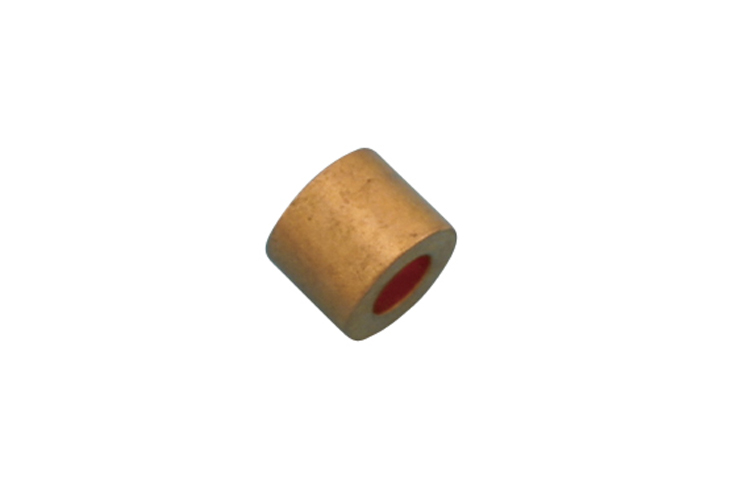
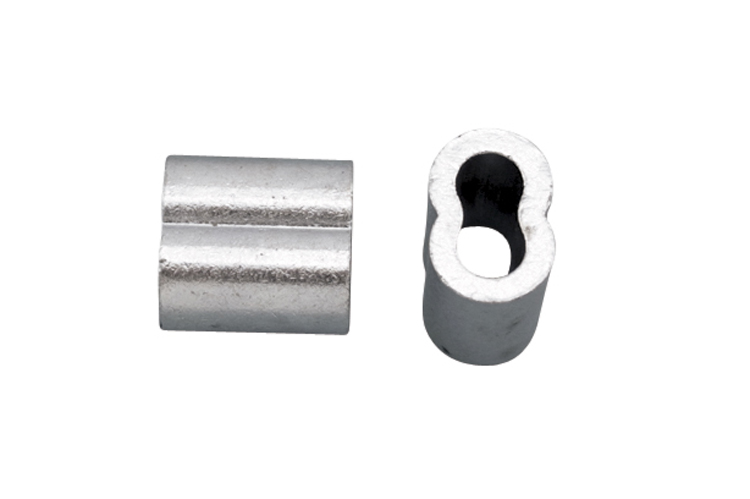
Swage sleeves are compressed around correctly sized wire rope with the required tool and die. They are commonly used to form an eye around a compatible thimble or to create another approved cable termination. Stop sleeves form a compact end termination for compatible fittings or assemblies. Sleeve materials and dimensions differ, so products that appear similar are not automatically interchangeable.
Before ordering, confirm wire-rope diameter and construction, sleeve bore, sleeve material, required number and location of compressions, compatible swaging tool and finished-gauge requirements. Follow the instructions for the exact sleeve and cable combination, and inspect the completed termination for correct compression, damaged strands or movement. Do not use a swaged assembly for lifting, fall protection or other critical service unless the components, tooling and finished assembly are specifically approved and verified for that application.
GUIDED SELECTION
Swage Sleeve Finder
Choose the sleeve function and material, then open a matching family to confirm the exact wire-rope diameter, sleeve dimensions, compatible cable construction and required swaging procedure.
4 matching families

Swage Sleeve FAQ
How do I choose the correct swage sleeve?
Match the sleeve to the exact wire-rope diameter, cable construction, sleeve material and approved swaging procedure. Confirm the manufacturer's specifications for the complete termination.
What is the difference between a swage sleeve and a stop sleeve?
A swage sleeve normally secures two cable sections to form a loop or eye. A stop sleeve is compressed near a cable end to create a terminal stop. They serve different functions and should not be substituted for one another.
When should I use an aluminum swage sleeve?
Use aluminum only when it is compatible with the specified wire rope, environment and swaging procedure. Confirm cable material, corrosion exposure and the exact manufacturer's guidance.
When should I use a copper swage sleeve?
Copper sleeves are used with compatible cable systems where their material, dimensions and swaging characteristics are specified. Confirm galvanic compatibility and environmental exposure.
What is a zinc-copper swage sleeve?
It is a copper sleeve with a zinc-plated exterior. The coating changes surface corrosion behavior but does not eliminate the need to confirm cable compatibility, environment and the approved termination method.
Can one swaging tool be used for every sleeve?
No. Use the tool, die cavity, compression sequence and number of compressions specified for the exact sleeve and cable combination. An incorrect die can produce an unsafe or damaged termination.
Should a thimble be used in a cable eye?
A compatible thimble may support the cable eye and help reduce wear or crushing. Match the thimble groove and dimensions to the cable, sleeve and mating hardware.
Can a hand-swaged termination be used for lifting?
Only when every component, the termination method and the completed assembly are expressly rated and approved for the intended lifting service. Material or appearance alone does not establish a lifting rating.
How should a swaged sleeve be inspected?
Check sleeve position, compression pattern, finished dimensions, cable damage, broken wires, corrosion, cracking, movement and deformation. Reject any termination that does not meet the applicable specification.
Showing all 6 results
-
Aluminum Stop Sleeves
SKU: FAM-A0754 Price range: $0.23 through $1.77 View products -
Aluminum Swage Sleeves
SKU: FAM-A0751 Price range: $0.14 through $8.04 View products -
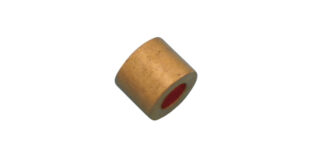
Copper Stop Sleeves
SKU: FAM-K0754 Price range: $0.56 through $19.49 View products -
Copper Swage Sleeves
SKU: FAM-K0752 Price range: $0.28 through $47.38 View products -
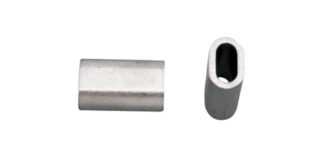
Stainless Steel Swage Sleeves
SKU: FAM-S0750 Price range: $1.00 through $180.09 View products -
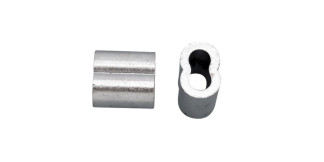
Zinc-Copper Swage Sleeves
SKU: FAM-Z0753 Price range: $0.33 through $54.68 View products
Showing all 6 results