
PRODUCT FAMILY
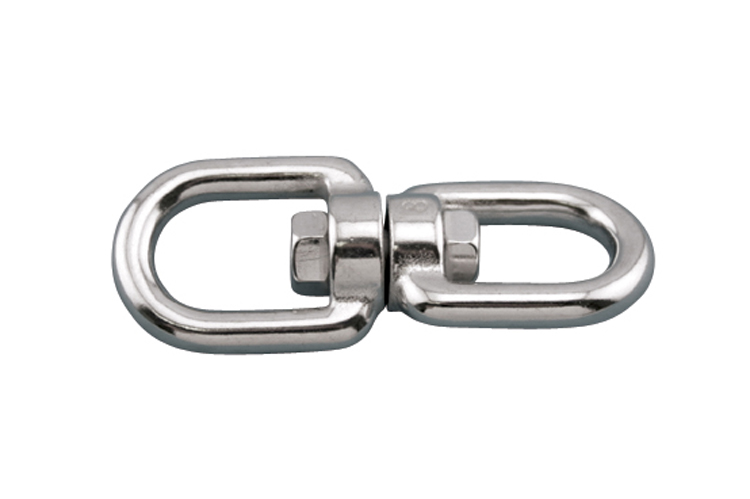
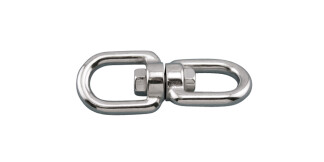
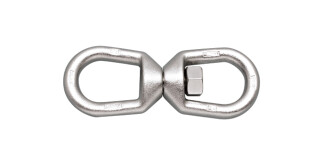
316 Stainless Steel Eye-to-Eye Swivels
SKU: FAM-S0128
Price range: $8.19 through $449.52
View sizes
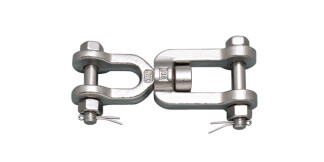
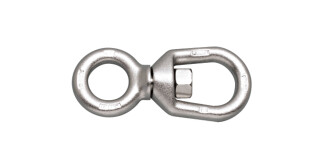
Choose 316 stainless steel swivels for marine rigging, chain, wire rope and general hardware assemblies that need controlled rotation between connected components. This category brings together eye-to-eye, jaw-to-eye, jaw-to-jaw and chain swivels, plus specialized no-snag and swivel gate-eye families.
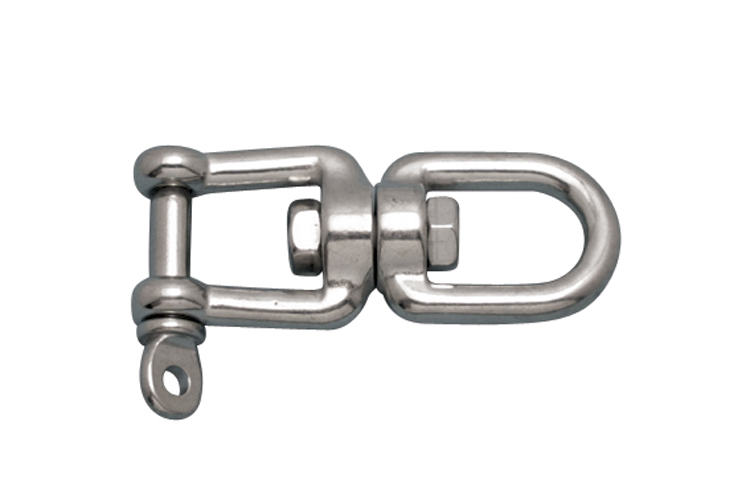
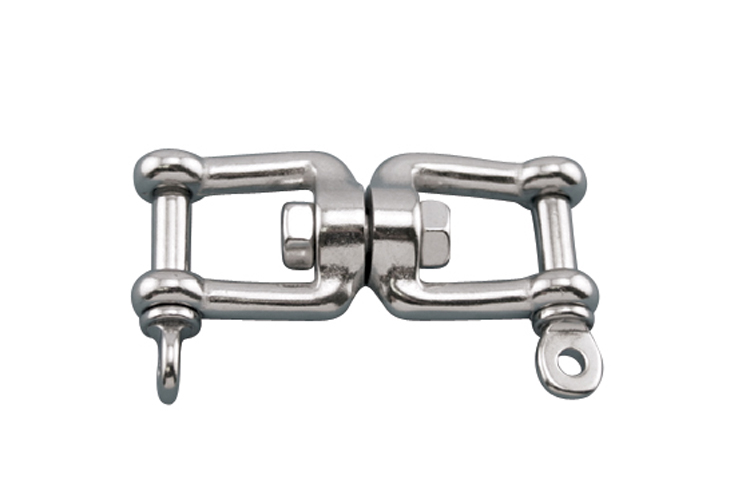
Start with the connection at each end. Eye fittings accept compatible shackles, hooks or links, while jaw fittings capture an eye or plate between the cheeks and secure it with a pin. Then compare overall length, eye opening, jaw width, pin diameter, body size and the published capacity for the exact product family. Standard, heavy-duty and federal-specification series have different dimensions and should not be treated as interchangeable simply because they look similar.
Use the Stainless Steel Swivel Finder below to narrow the catalog by end connection and construction class. Every family shown here is cataloged as 316 stainless steel, but always confirm the material of pins and retaining parts, rotation clearance, connected-hardware compatibility and the rating of every component in the complete assembly before ordering, installing or placing the swivel into service.
Start with the two end connections, then choose the construction or duty class. Open a matching family to select the exact body size, pin diameter and published capacity required by the complete rigging system.
SKU: FAM-S0128
SKU: FAM-S0155-0
SKU: FAM-S0156-0
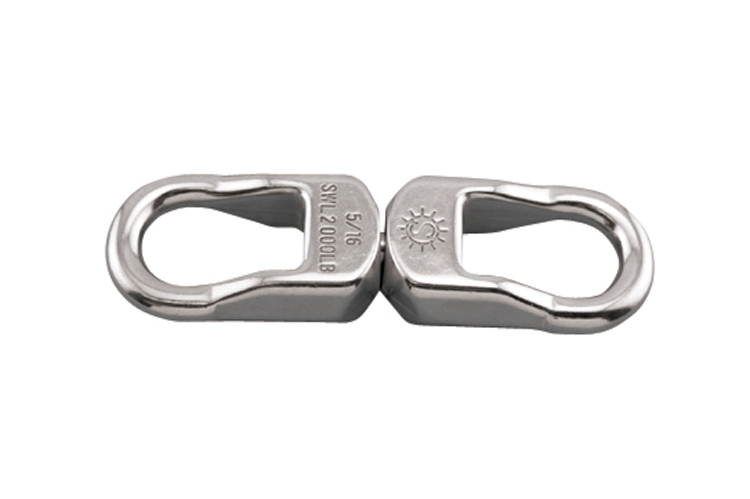
SKU: FAM-S0128-HD
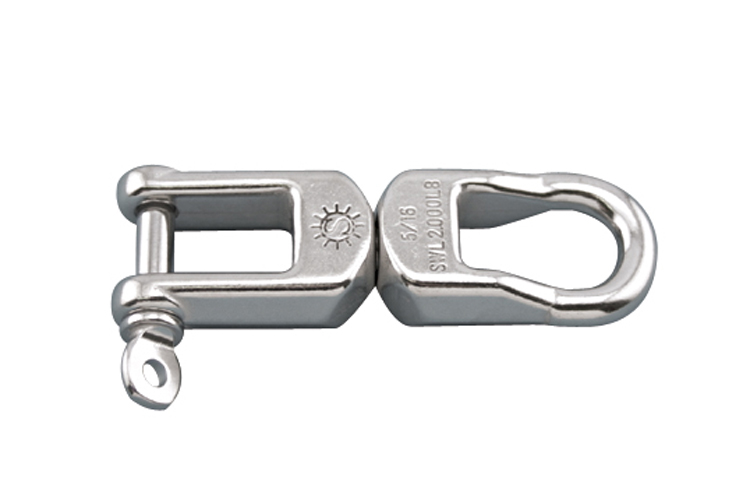
SKU: FAM-S0155-H

SKU: FAM-S0156-H

SKU: FAM-S0128-FS

SKU: FAM-S0155-F

SKU: FAM-S0156-F

SKU: FAM-S0128-FX
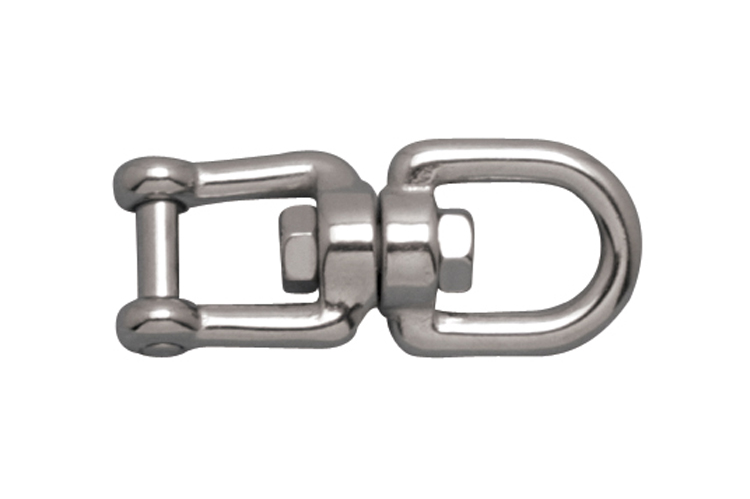
SKU: FAM-S0155-N
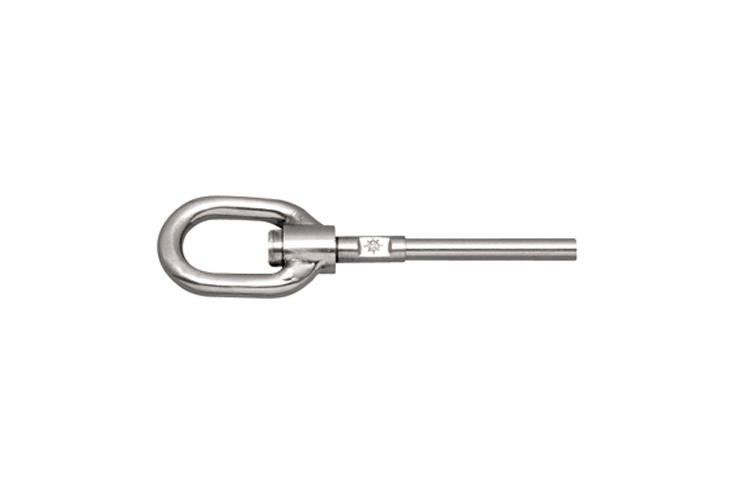
SKU: FAM-S0718-S
A swivel allows connected hardware to rotate relative to the opposite end, helping relieve twist in chain, wire-rope and general rigging assemblies. It does not correct poor alignment or replace proper system design.
Choose the end connection that physically matches the adjoining components. Eyes accept compatible hooks, shackles or links; jaws capture an eye or plate between the cheeks and secure it with a pin.
A chain swivel is shaped to connect within a compatible chain assembly while allowing rotation. Confirm the chain size, end geometry, pin or link dimensions and the rating of the complete assembly.
Those labels describe different construction families and dimensional series. They are not interchangeable capacity claims. Compare the published dimensions, material, proof or working-load information and intended service for the exact size.
A no-snag design reduces exposed pin features that can catch on line or nearby hardware. It can be useful where a smoother profile is desirable, but the exact locking method and inspection requirements must still be followed.
Yes. The families cataloged on this page are 316 stainless steel. Confirm the grade and finish of pins, retaining parts and every connected component before installation.
Only when the exact swivel and every part of the assembly are expressly rated and approved for the intended lifting service. Product appearance, stainless grade or price alone does not establish a lifting rating.
Check the body, eyes, jaws, pins and retainers for wear, cracks, distortion, corrosion, binding and excessive play. The swivel should rotate freely under appropriate unloaded conditions and damaged parts should be removed from service.
Confirm end connection, overall length, eye opening, jaw width, pin diameter, body size, rotation clearance, stainless grade, expected load, environment and the capacity of every adjoining component.
Showing all 12 results




Showing all 12 results