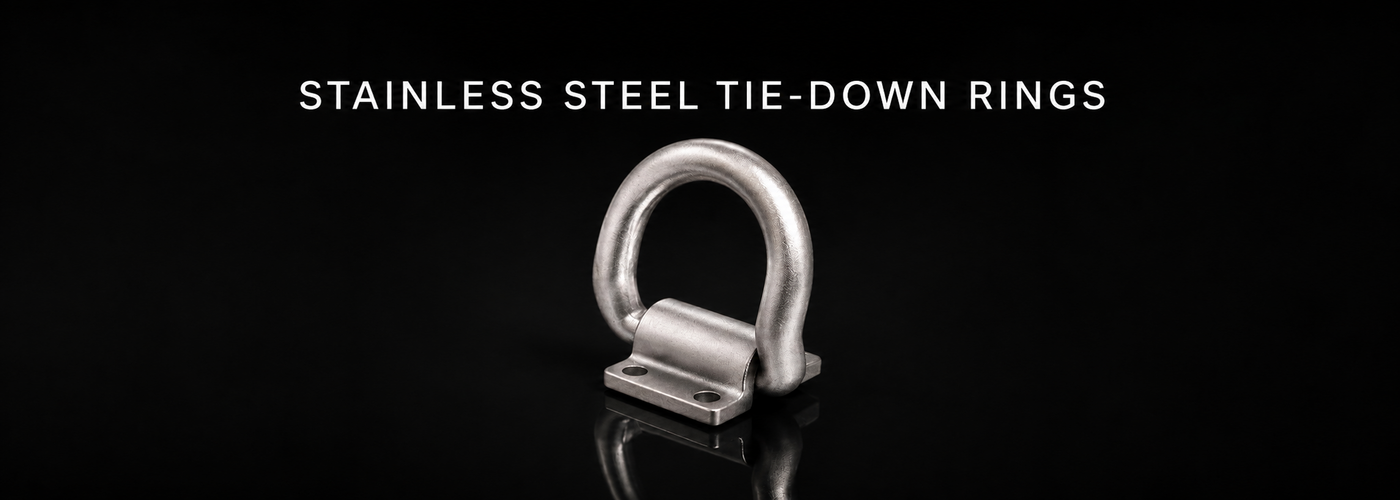
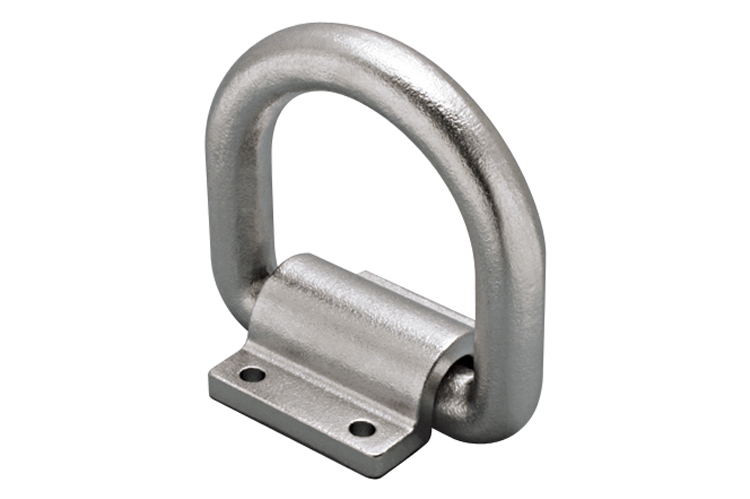
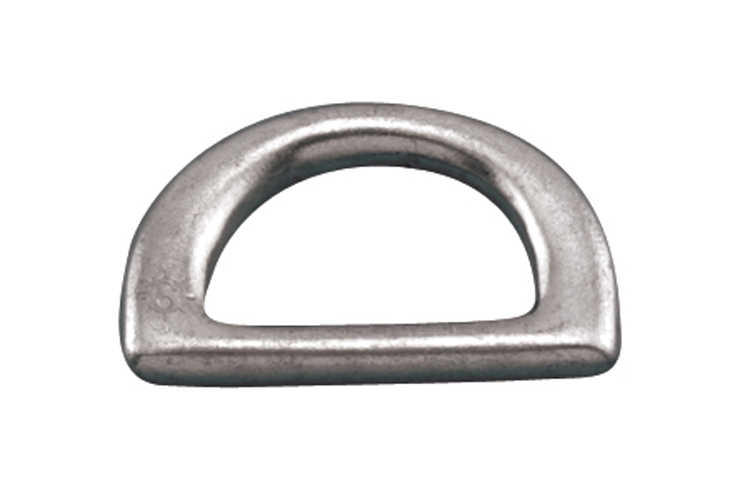
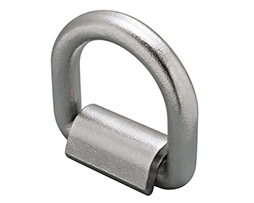
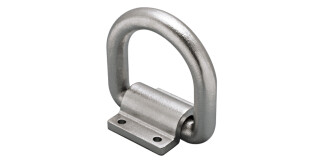
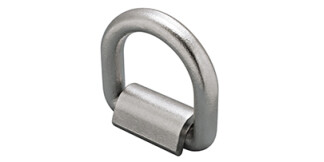
Choose 316 stainless steel tie-down rings and lashing points for marine, trailer, deck, cargo-restraint and webbing applications. This category includes bolt-on folding lashing rings, weld-on folding lashing rings and forged web D-rings, allowing you to begin with the installation method required by the assembly.
Bolt-on lashing rings attach to a compatible mounting structure using correctly selected fasteners and backing support. Weld-on lashing rings provide a permanent attachment point when installed on a suitable structure using an appropriate welding procedure. Forged web D-rings provide a fixed connection for compatible straps, webbing and related restraint hardware.
Use the Stainless Steel Tie-Down Ring Finder below to compare installation method and ring construction. Before ordering, confirm the ring opening, mounting-plate dimensions, hole spacing, strap or hook compatibility, loading direction and published capacity of the exact size. The strength of a completed installation also depends on its fasteners, welds, mounting surface and supporting structure.
GUIDED SELECTION
Stainless Steel Tie-Down Ring Finder
Select an installation method and ring construction to compare
stainless steel tie-down and lashing-ring families. Open the
selected family to confirm dimensions, mounting requirements
and the published working information for the exact size.
Begin with the installation method, mounting surface,
required connection opening, loading direction and the
published capacity needed for the complete restraint
system. Confirm the exact product dimensions before
ordering.
What is the difference between bolt-on and weld-on rings?
Bolt-on rings attach through a mounting plate and compatible
fasteners. Weld-on rings require an appropriate weldable
mounting surface and a qualified welding procedure. The
finished installation is only as strong as its mounting
structure and workmanship.
What is a forged web D-ring?
A forged web D-ring is a fixed attachment point commonly
used with compatible webbing or strap assemblies. Confirm
the internal opening, bar dimensions, strap width and
published product information.
Why use a folding lashing ring?
A folding ring can lie closer to the mounting surface when
it is not in use. This can reduce interference, but adequate
clearance must remain for the ring, connected hook or strap
and its intended movement.
Are tie-down rings suitable for overhead lifting?
Do not use a tie-down or lashing ring for overhead lifting
unless the exact product and complete installation are
expressly rated and approved for that service. Cargo
restraint capacity does not automatically establish a
lifting rating.
Does stainless steel determine the load capacity?
No. Stainless steel provides corrosion resistance, but
material alone does not establish capacity. Ring geometry,
manufacturing, fasteners, welds, mounting structure and
loading direction all affect the completed installation.
What should I confirm before installing a bolt-on ring?
Confirm the mounting-plate dimensions, hole spacing,
fastener size and grade, backing support, mounting-surface
strength, installation torque and access behind the
mounting surface.
What should I confirm before installing a weld-on ring?
Confirm that the base material is suitable for welding and
that the specified welding process, filler material, joint
preparation and corrosion treatment are appropriate. Use
qualified personnel for critical installations.
How should tie-down rings be inspected?
Inspect the ring, hinge, plate, welds, fasteners and
supporting structure for corrosion, cracks, distortion,
looseness, wear or restricted movement. Remove damaged or
questionable components from service.